Waterloss Foresight - Predict
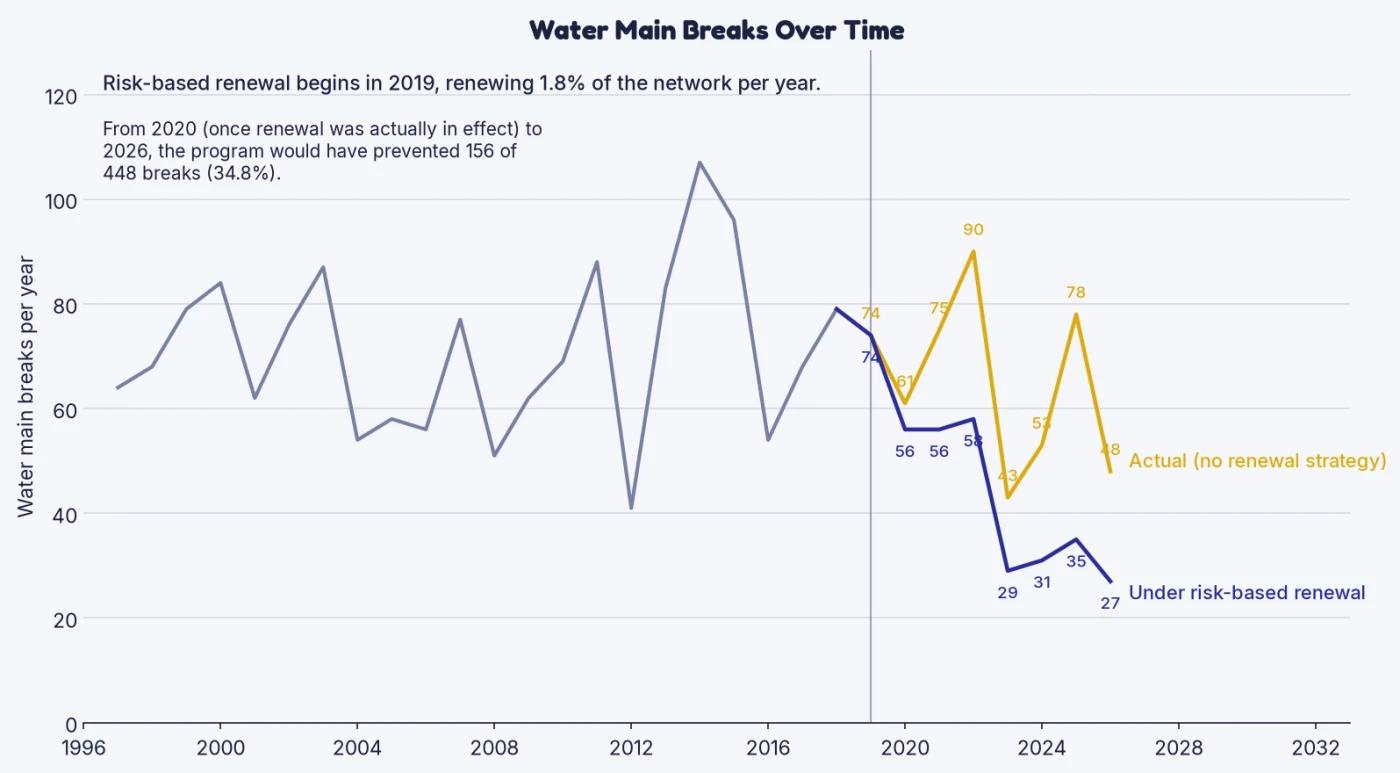
27% fewer leaks with predictive maintenance
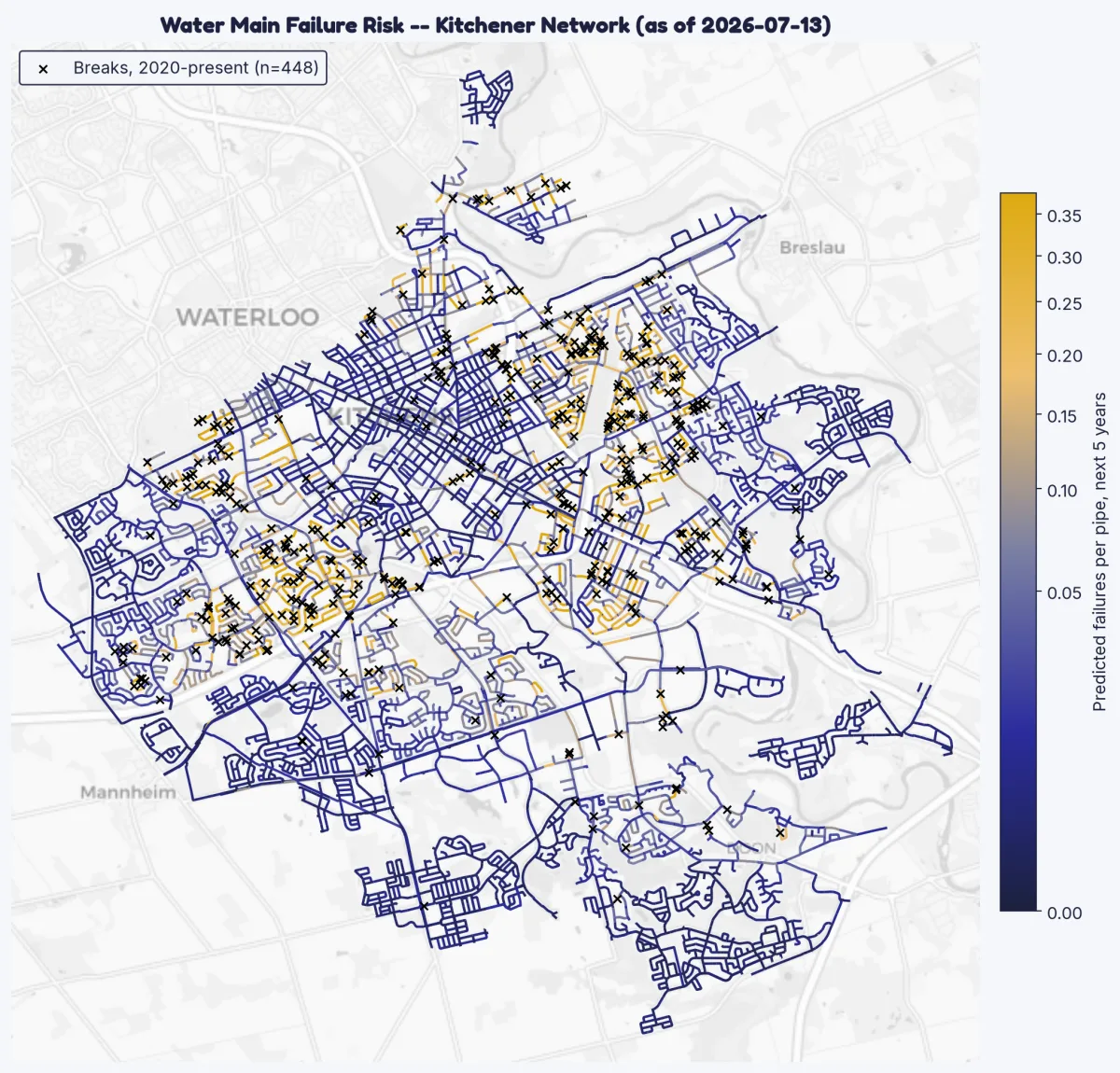
Predicts pipe-break risk and turns it into ranked, decision-ready renewal and rehabilitation priorities — before the next failure, not after. Waterloss Foresight first validates and fills gaps in GIS and failure data — pipe material, install year, diameter — through Data Drop, then feeds that clean data into a Bayesian model built specifically for sparse, noisy municipal datasets.
Book a meeting
How it works
Two connected stages
-
Stage 1
Validate & Impute
Data Drop validates incoming GIS and failure data, and systematically fills gaps in pipe material, install year, diameter and other key attributes. Rather than leaving missing attributes as blanks that block analysis, Foresight uses graph-based learning and neighborhood patterns to infer what's likely true about an unlabeled pipe from its connected network — turning an incomplete asset inventory into one standardized, analysis-ready layer, without waiting for a full manual survey first.
-

Stage 2
Predict & Rank
A Bayesian, probabilistic model — tailored for sparse, noisy municipal data — produces a ranked, uncertainty-aware list of pipes most likely to fail next. Unlike black-box approaches that can break down under missing data, this model captures the dynamics that matter in a real network: how aging behaves differently by material, how fragility increases after repeated failures, and how local conditions shape all of it — giving every prediction an honest confidence level instead of a false sense of certainty.
Inside Foresight
From risk map to renewal plan
200
emergency repairs avoided per year — Indigo's own 2030 sustainability target for Foresight across its customer base.